
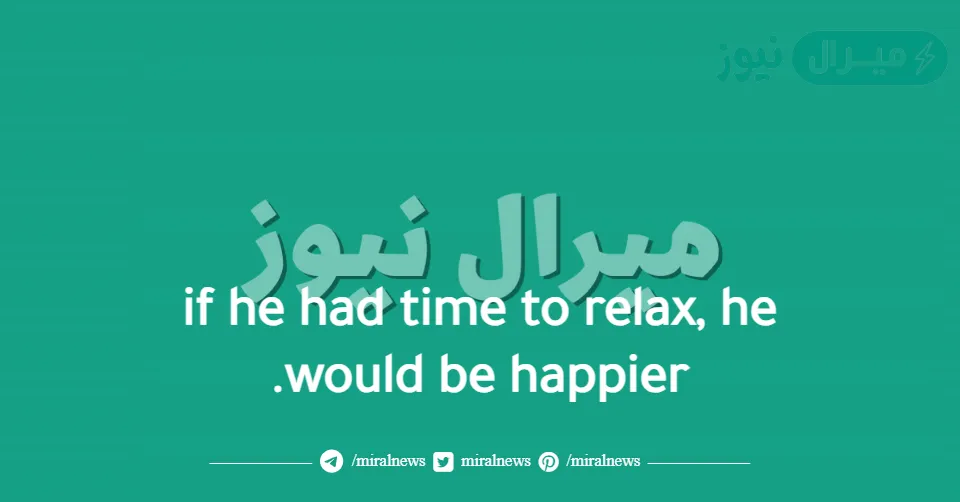
It’s a classic conditional sentiment, isn’t it? That specific structure—”If he had… he would be…”—really captures that sense of a missed opportunity or a lingering “what if.”
Whether you are looking at this from a grammatical perspective or a philosophical one, here is a quick breakdown of what’s happening in that sentence:
1. The Grammar (Second Conditional)
This is a textbook example of the Second Conditional. We use this structure to talk about hypothetical or “unreal” situations in the present or future.
The Condition: “If he had time to relax” (Past Simple, but referring to right now).
The Consequence: “he would be happier” (would + base verb).
It implies that, in reality, he doesn’t have much time to relax, so he isn’t as happy as he could be.
- الاجابة : صواب.
2. The Sentiment
There is a subtle weight to this sentence. It suggests a few different vibes depending on the context:
Sympathy: Feeling for someone who is overworked or burnt out.
Observation: Recognizing that someone’s stress is a choice or a result of their environment.
Advice: A gentle way of saying, “He really needs to take a break.”
A Slight “Journalistic” Tweak? If you were writing this for a profile or a story and wanted to make it punchier, you might try:
“A rare moment of relaxation would surely boost his spirits.”
“He remains driven, though a reprieve from his schedule would likely bring a welcome sense of joy.”
